
Illinois homes do not lose to winter in January. They lose in October, when the gutter stayed clogged, the hose stayed connected and the gap under the back door stayed open. Winter just collects the paperwork. This is the fall and winter maintenance checklist our crew uses in Lake County, organized month by month, with honest notes on what you can do yourself in an afternoon and what is worth booking a pro for before the calendar gets ugly. Print it, put it on the fridge, argue with it in the comments of your family group chat.
Why Illinois Homes Need Their Own Checklist
Generic winterizing lists are written for a gentler country. Northern Illinois runs a specific gauntlet: forty or more freeze-thaw cycles in a typical winter, lake-effect moisture that keeps wood damp deep into December, and temperature swings that can cover fifty degrees in a single week. Every one of those cycles pumps water into any crack it can find, freezes it, and wedges the crack a little wider. Concrete, caulk, paint, grout and wood all lose the same way.
That physics decides the whole strategy. The goal of fall maintenance here is not tidiness, it is keeping water out of materials before the freezing starts. Sealed wood, moving gutters, closed caulk joints and drained pipes all serve that one sentence. Understand it once and the checklist below stops being chores and starts being a defense plan.
Our winter is a free home inspector with a bad attitude. It finds every weak point you did not fix in October and writes the report in your drywall by March.
Evgheni, Real Construction
September: The Outside Sweep
September in Lake County is the last month when everything outside is still pleasant to fix. Use it.
- Clean the gutters and check the downspouts. Clogged gutters are the number one source of the rot repairs we do all spring. Water needs to leave the roof and land at least a few feet from the foundation. Tom Silva explains the downspout part better than anyone:
- Walk the siding with a screwdriver. Press the trim around windows, doors and anywhere paint looks tired. Soft wood found in September costs hundreds, the same wood found in April costs more. Our guide on the early signs of wood rot shows exactly what to poke and where.
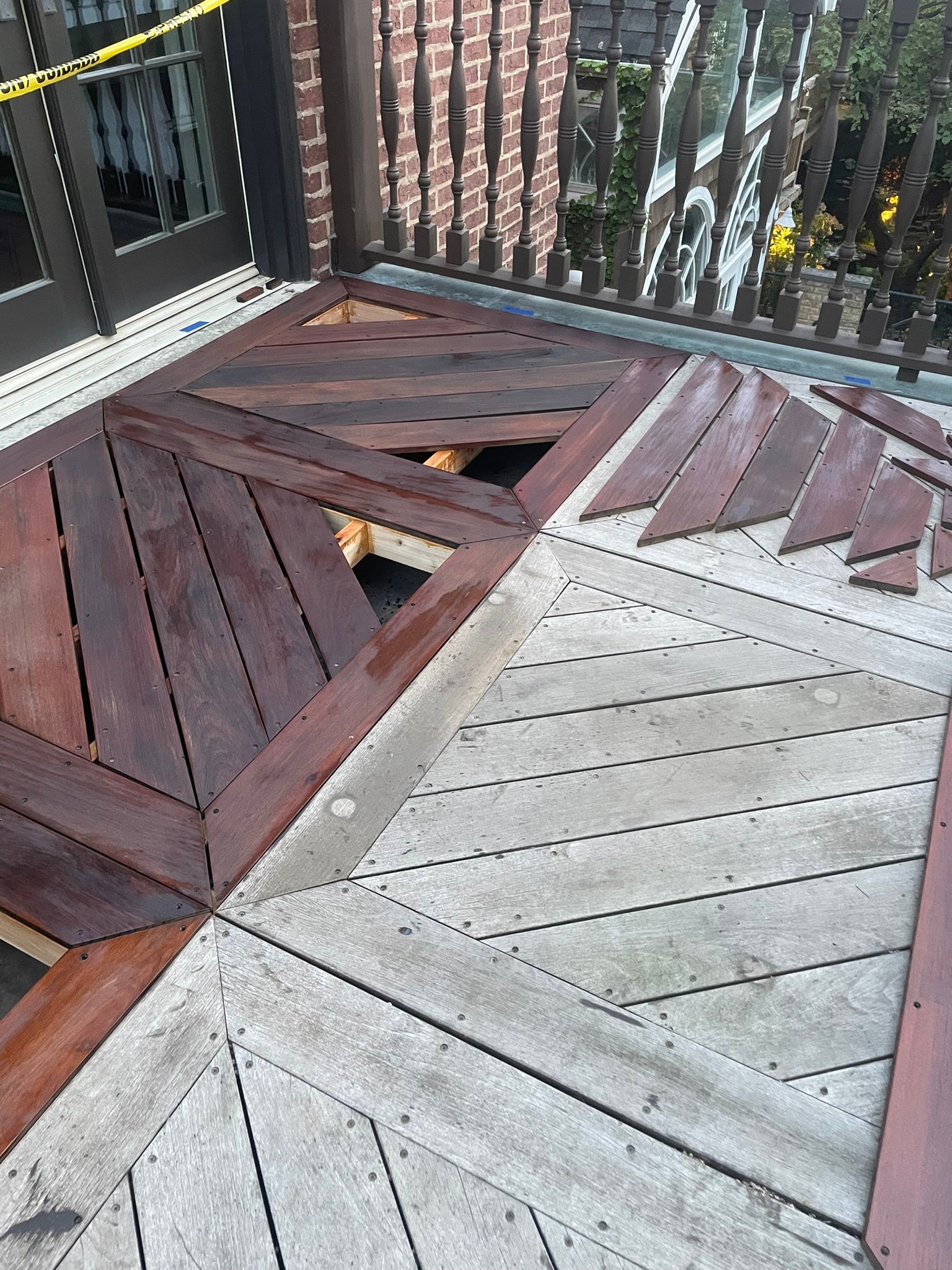
- Stain or seal the deck if water stopped beading. Sealed boards shrug off snow, thirsty boards drink it and crack in the freeze. September and early October give you the dry days and the right temperatures for the finish to cure.
- Re-caulk exterior joints. Anywhere two materials meet, sun has been eating the caulk since May. A $7 tube now beats a drywall repair in March.
October: Seal the Envelope
October is about the gaps. Heated air leaks out, cold air leaks in, and your furnace pays the difference all winter. The Department of Energy’s Energy Saver program estimates sealing and weatherizing as one of the highest-return efficiency moves a homeowner can make, and our thermal camera agrees with them every November.
- Weatherstrip the exterior doors. Close the door on a dollar bill. If it slides out easily, so does your heat.
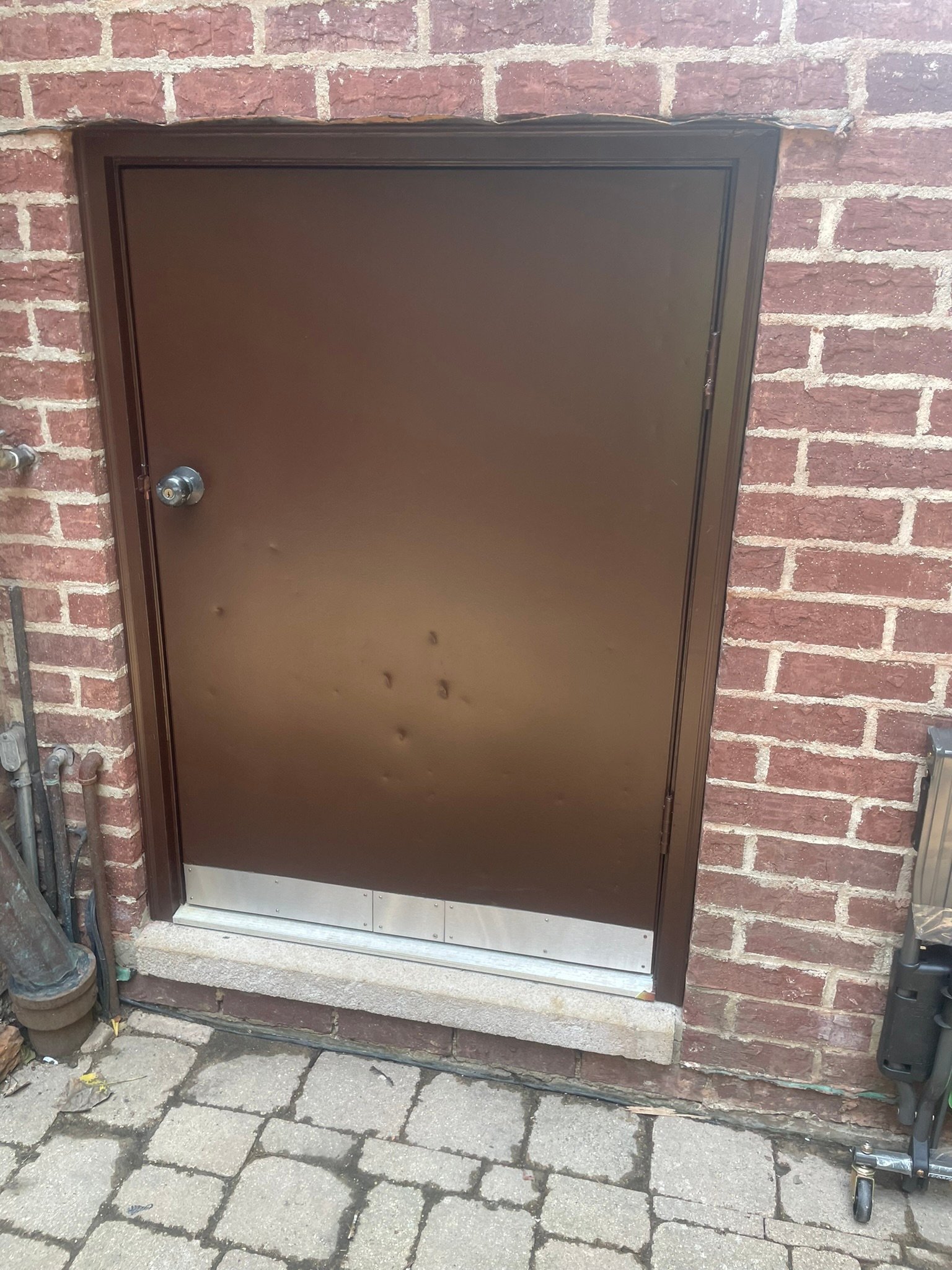
- Add or replace door sweeps. The gap under a door is a mail slot for cold air.
- Caulk window frames inside and out, and consider film kits on the leakiest old windows.
- Check the garage door seal, especially with living space above the garage. Cold garage ceilings make cold bedroom floors.
- Reverse the ceiling fans. Clockwise in winter, pushing warm air down. Free comfort, thirty seconds per fan.
November: Before the First Hard Freeze
The National Weather Service keeps a whole cold weather safety section for our part of the country, and northern Illinois earns its place in it most years. Everything in this block has a deadline, and the deadline is the first hard freeze.
- Disconnect every garden hose. A connected hose traps water in the faucet and freezes the pipe inside the wall. This one habit prevents more flooded basements than any gadget.
- Shut off and drain exterior faucets if they are not frost-free, and blow out the sprinkler system.
- Find your main water shutoff and test it. When a pipe bursts, you will not want to be reading labels in the dark. Richard Trethewey’s version of this speech has saved thousands of basements:
- Insulate pipes in cold zones: crawl spaces, garages, exterior walls under sinks. Foam sleeves cost less than lunch.
- Service the furnace and swap the filter. HVAC companies book out fast after the first cold snap, schedule before it.
- Test smoke and CO detectors. Furnace season is CO season. Ten minutes, new batteries, done.
Every February we pump out a basement because of a twelve dollar hose left on a faucet. The hose is never worth it. Unscrew the hose.
Evgheni, owner of Real Construction
December Through February: Living With Winter
- Watch the roof edge for ice dams. Icicle curtains mean heat is escaping into the attic, melting snow that refreezes at the cold edge. The cure is attic insulation and ventilation, not a hammer and a ladder in January.
- Shovel the deck the smart way, along the boards with a plastic shovel, and skip the rock salt on wood. Your spring self will thank you when reading our deck repair cost guide purely out of curiosity.
- Keep interior humidity around 30 to 40 percent. Too dry cracks the trim, too humid fogs the windows and feeds mold in the corners.
- Run bathroom fans through the winter. The steam that skips the fan condenses in the attic instead. FEMA’s winter weather guide covers the storm-emergency side of the season, worth one read while the kettle heats.
- Open cabinet doors under sinks on exterior walls during deep cold snaps, and let those faucets drip overnight when forecasts go below zero.
The Whole Checklist on One Screen
| When | Task | DIY or pro? |
|---|---|---|
| September | Gutters and downspouts cleaned | DIY or pro |
| September | Screwdriver rot check on trim and deck | DIY, pro for repairs |
| September | Deck stain or seal | Either |
| October | Exterior caulk refresh | DIY |
| October | Weatherstripping and door sweeps | DIY or pro |
| October | Ceiling fans reversed, filters swapped | DIY |
| November | Hoses off, exterior faucets drained | DIY |
| November | Sprinkler blowout | Pro |
| November | Furnace service, CO detectors tested | Pro / DIY |
| November | Pipe insulation in cold zones | DIY or pro |
| All winter | Ice dam watch, humidity control, fans running | DIY |
The Fixes Worth Booking a Pro For
Some fall jobs are worth handing off, either for the ladder work or because they hide bigger problems. A typical pre-winter pro visit in our area runs $150 to $600 depending on the list, full pricing logic in our handyman cost guide. The usual suspects: high gutters, rot repairs found during the September poke test, doors that need more than weatherstripping, window glazing, and the drywall or trim repairs you promised someone in June. Batch them into one visit, that is the whole trick of our small jobs service, and winter-proofing becomes one calendar entry instead of six.
What Winter Leaves Behind
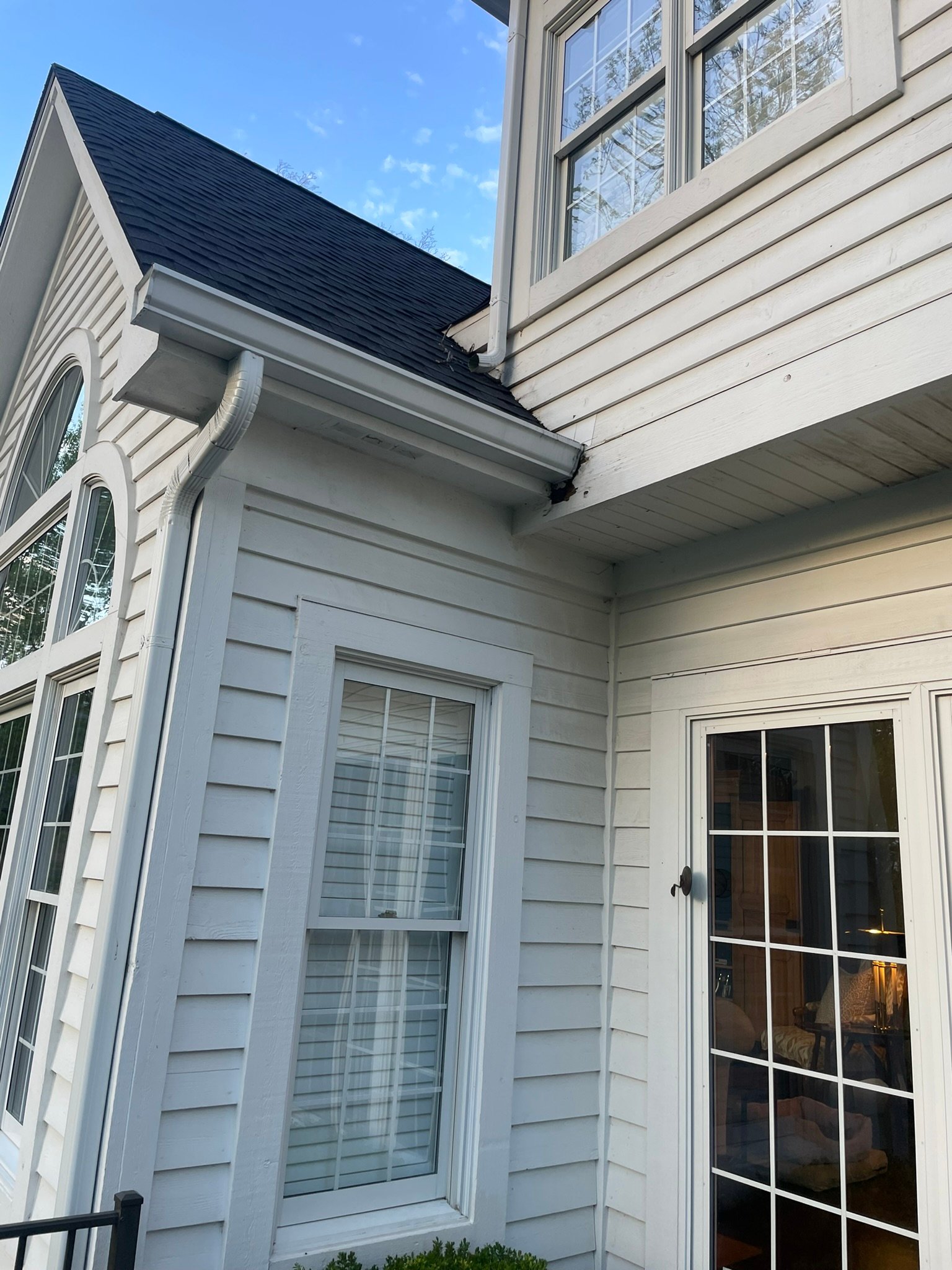
Even a well-prepped house takes some damage, which is why the checklist has a spring twin: walk the exterior in April and look up. The photo below is what we find when the September gutter cleaning got skipped for a few years running. Water went behind the gutter, froze, expanded, and quietly turned a soffit corner into compost.
Interior damage shows up too: nail pops, corner cracks and door rubs from the house moving through the freeze. All normal, all small, all on the list for our interior repair service when spring opens the calendar.
Winter Maintenance FAQ
When is it too late to stain the deck before winter?
Most finishes want temperatures above 50 degrees for a couple of days and dry boards to start. In Lake County that window usually closes in late October. Miss it and the right move is to wait for spring, a finish applied to cold damp wood peels by February and takes your money with it.
Do heated gutter cables work?
They treat the symptom. Cables melt channels through the ice so meltwater can escape, which protects the roof edge, but the ice dam exists because attic heat is melting snow in the first place. Insulation and ventilation fix the cause. Cables are a fine bandage on a roof that gets dams every year, and a poor substitute for a $40 attic inspection.
What is the single most skipped item on this list?
The hose. Every year, the hose. It is also the only item on the list that costs zero dollars and zero skill, which proves home maintenance has a sense of humor. Second place goes to the furnace filter, which is somehow still in its box on top of the furnace, exactly where it was left in October with the best of intentions.
Book the Fall Visit Before the Fall Rush
Send us your list in September and everything above gets handled in one or two visits, with photos of anything we found while we were up there. Real Construction serves Mundelein, Vernon Hills, Libertyville, Buffalo Grove, Waukegan and the rest of Lake County. See the full services page, then request a free estimate or call 224 313 2093. Your February self is already grateful.
Written by the Real Construction team from field experience across Lake County, Illinois winters. Last updated July 2026.